Are You Feeling Lucky?


Increase Your Luck Surface Area
As we move into March, I’m hopeful the cold weather is behind us and that spring is doing what it always does — pushing new growth to the surface.
March has always felt symbolic to me. It comes in like a lion and goes out like a lamb. It reminds us that seasons shift, momentum builds, and progress follows preparation. We talk a lot about luck this time of year. But in business, luck rarely arrives by accident. More often, it’s the result of preparation meeting opportunity.
The most successful entrepreneurs I know don’t sit back and wait for fortune. They build it. They expand their “luck surface area” by taking calculated risks, building strong relationships, staying adaptable, and moving forward even when conditions aren’t ideal. When setbacks happen, they don’t label it bad luck — they look for the opening inside it.
At LionShare, our mission has always been to create an environment where those opportunities are more likely to happen — where conversations lead to partnerships, where proximity leads to referrals, and where being in the right room changes the trajectory of your business.
If LionShare has helped increase your “luck surface area” — through a meeting, a referral, a workspace breakthrough, or a new relationship — then we’re doing exactly what we set out to do.
Thank you for being part of this community and for choosing LionShare as a place to build, grow, and execute.
Here’s to a strong March ahead.
Michael Januzzi
Founder




Creating Your Own Luck
Why fortune favors the prepared.
You’re in luck.
At least—you can be.
St. Patrick’s Day makes luck feel mystical. Shamrocks, green shirts, pots of gold. But in business, luck is rarely random. More often, it’s preparation meeting opportunity. It’s awareness, resilience, and proximity working together over time.
Research shows that people who consider themselves “lucky” behave differently. They notice more. They engage more. They remain open to unexpected outcomes. In one well-known study, participants were asked to count photos in a newspaper. The self-described lucky participants finished almost immediately—not because they counted faster, but because they noticed a large printed message with the answer. They were simply more observant.
In business, that translates directly.
Lucky entrepreneurs see opportunity in conversations. They recognize potential partnerships in casual introductions. They view obstacles not as dead ends but as openings. At LionShare, we see this constantly. A hallway introduction turns into a referral. A shared table becomes a collaboration. A meeting room booking becomes a long-term relationship. That isn’t superstition—it’s exposure. The more rooms you put yourself in, the more opportunity you’re able to notice.
“I’m a great believer in luck, and I find the harder I work, the more I have of it.
There’s also intuition. Experienced operators develop pattern recognition over time. They know when to trust their instincts—when to move forward, when to pivot, when to walk away. Intuition isn’t guesswork. It’s accumulated experience surfacing quickly. And strong environments accelerate that learning curve. Surrounding yourself with capable people sharpens judgment and increases confidence in decision-making.
Expectation plays a role as well. When you approach opportunities assuming progress is possible, you show up differently. Energy shifts. Communication shifts. Outcomes often follow. Optimism alone doesn’t build companies—but constructive confidence absolutely influences execution.
“Luck is a matter of preparation meeting opportunity.”
And finally, resilience may be the most underestimated component of luck. Setbacks are inevitable. The difference is interpretation. Some people see bad luck as confirmation that they should stop. Others see it as feedback. They adjust, refine, and stay in motion long enough for probability to work in their favor.
At LionShare, our goal has never been to promise luck. It’s to create the conditions where it becomes more likely—through proximity, conversation, accountability, and professional presence.
If LionShare has helped you make a connection, secure a client, refine an idea, or see an opportunity you might have otherwise missed, then perhaps you’ve experienced what real luck looks like.










WorkDens: The Day Pass That’s Changing How Jacksonville Works
Something interesting has been happening at LionShare.
Our WorkDen Day Passes have been selling out — consistently. In fact, Mondays through Wednesdays have been sell-outs for the last two months. And the reason is simple: no one else in Jacksonville offers what we do.
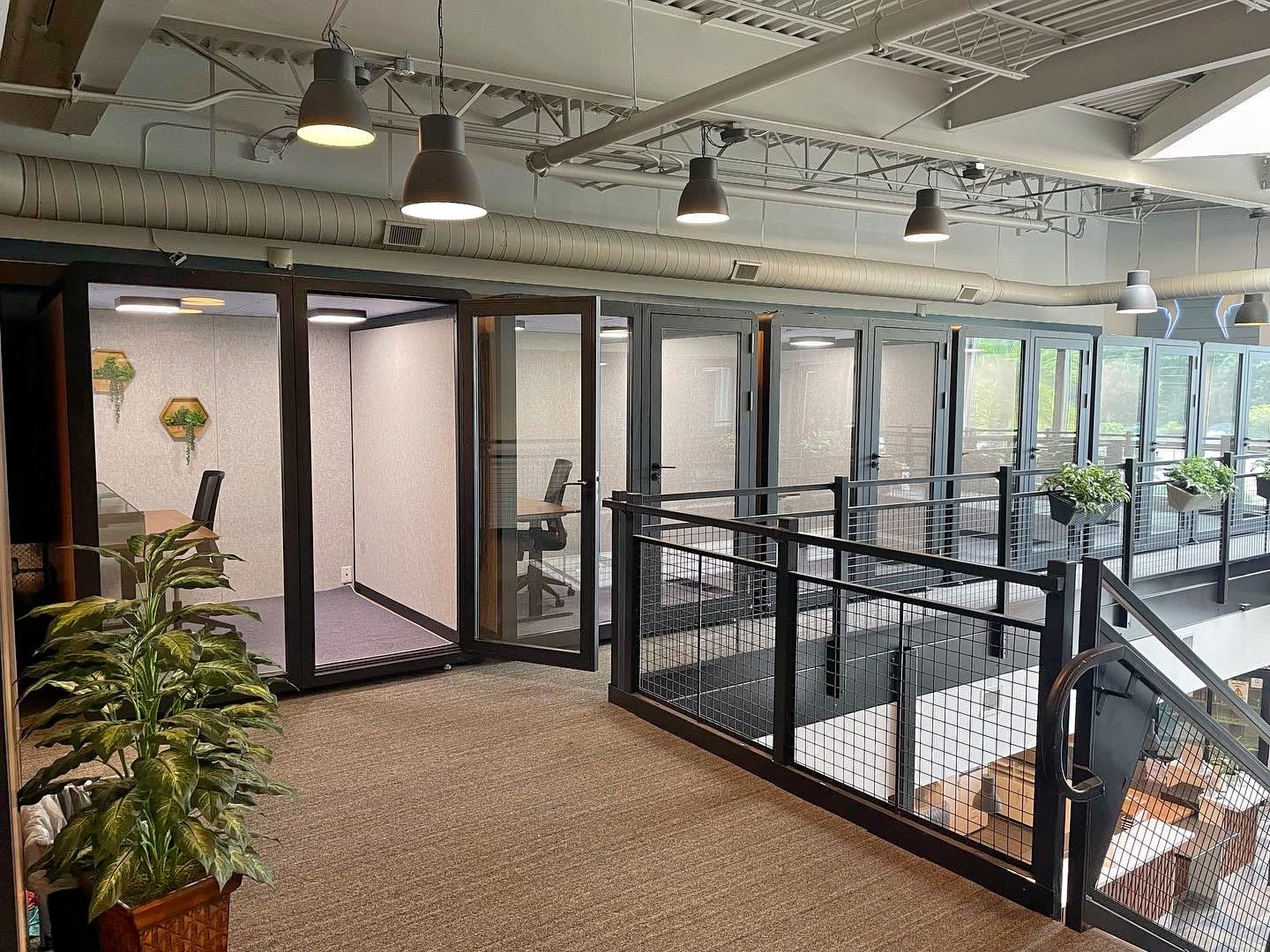
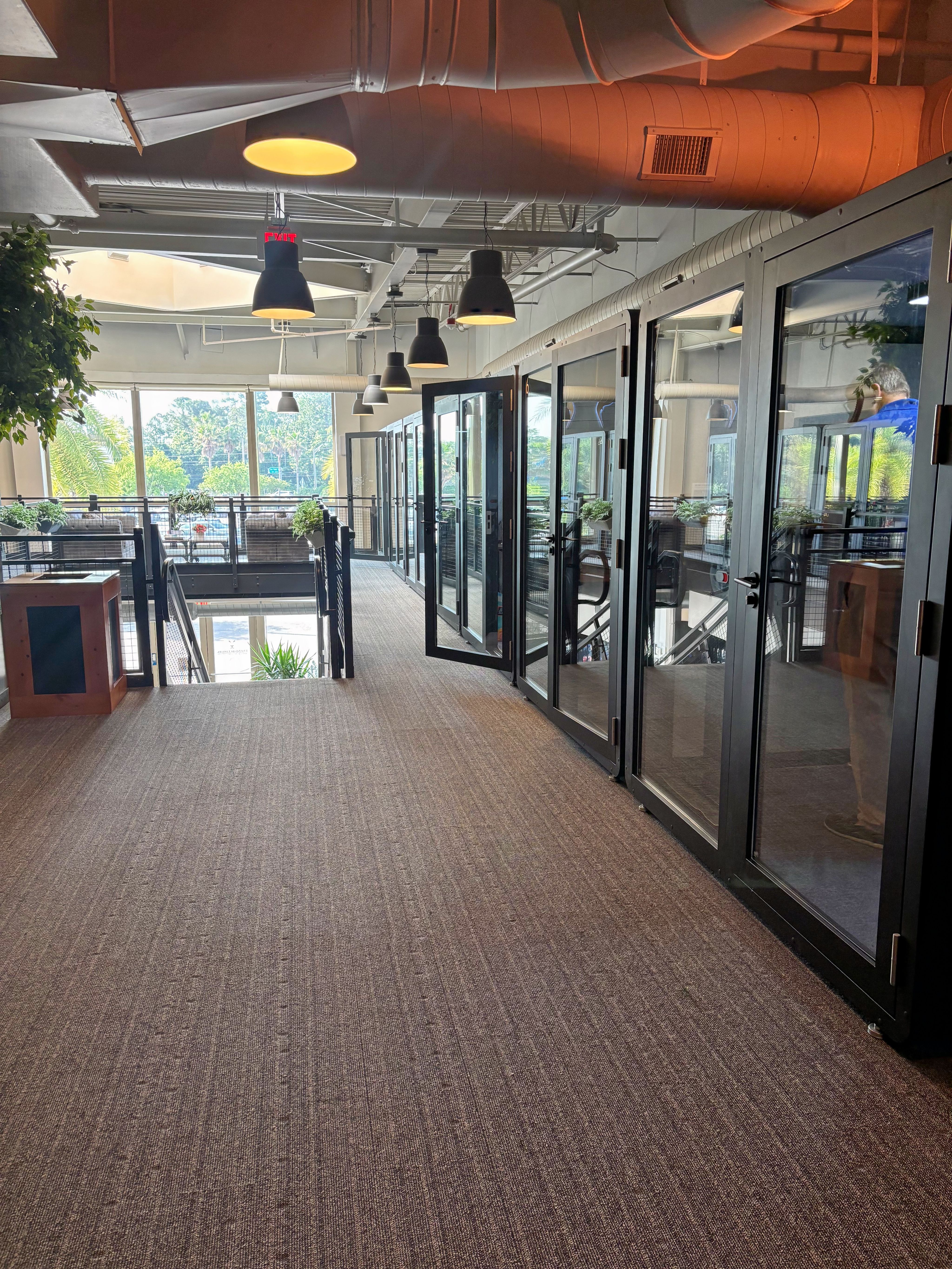
A WorkDen isn’t an open desk. It isn’t a shared coworking table. It isn’t a noisy corner of a coffee shop. It’s a fully enclosed, soundproof mini-office designed for professionals who need to focus, take calls, meet virtually, and actually produce meaningful work.
Day passes are available Monday through Friday from 8:00 AM to 7:00 PM, and pricing starts at $25 for the day. If you purchase a 20-pack with a one-year expiration, your daily cost drops to just $18 per day. That’s about what you’d spend at a coffee shop on drinks and food — without getting privacy, security, or performance-level workspace in return.
Each WorkDen is fully equipped with a sit-stand desk, large monitor, color-changing mood lighting, and a built-in ventilation system that pulls air out and pushes cool air in. They are engineered for productivity. They are built for Zoom calls. They are designed for professionals who need to think clearly and execute without distraction.
If you need to meet with a team instead of working solo, you can upgrade to an Office Day Pass and use a larger private office for collaboration, planning, or client meetings.
And if you’re not sure whether it’s right for you? Buy one and test it. Experience it for yourself. If you find you love it, you can reserve a WorkDen monthly with 24/7 access, Monday through Sunday, so it’s always there when you need it.
Why a WorkDen Beats Open Coworking (and Coffee Shops)
Open coworking spaces can be great for energy and community — but they’re not ideal for privacy. Phone calls become awkward. Speakerphone conversations feel disruptive. Sensitive client discussions become impossible. Focus comes in waves instead of in sustained blocks.
Coffee shops? Even worse. Background noise, inconsistent WiFi, limited power access, and the constant pressure to keep purchasing just to justify your seat.
A WorkDen gives you:
- True sound isolation
- Professional appearance for video calls
- No background interruptions
- A controlled environment
- Real ventilation and airflow
- A sit/stand workstation built for full-day performance
In short, it gives you control. And control increases output.
We built WorkDens because modern professionals don’t just need a place to sit — they need a place to perform. No one in Jacksonville offers a soundproof mini-office for the day like LionShare.
If you don’t want to risk a sellout, reserve your WorkDen online ahead of time. If we’re full, we’ll always do our best to upgrade you into a larger private office or Zoom room when availability allows.
The right environment changes the quality of your work. And at LionShare, no one does private workspace like we do.




Spring Forward… Or Should We?
March 8 marks the beginning of Daylight Saving Time. At 2:00 A.M., clocks “spring forward” one hour. If you forget, you’re late. If you remember, you’re tired.
But the bigger question is: why are we still doing this?
A Brief History
Daylight Saving Time (DST) was first widely adopted during World War I as a fuel conservation measure. The theory was simple: more daylight in the evening meant less artificial lighting and lower energy usage. The United States reintroduced it during World War II, and later standardized it under the Uniform Time Act of 1966.
Over time, Congress expanded it. Today, most U.S. states observe DST from March to November (with the exception of Arizona and Hawaii). The original intent was resource efficiency. But modern research suggests the energy savings are minimal at best.
The Case Against It
Critics argue that DST disrupts:
• Sleep cycles
• Workplace productivity
• Health outcomes
• Traffic safety
Studies have shown spikes in heart attacks and accidents immediately following the spring time change. Losing one hour of sleep has measurable physiological consequences.
From a business perspective, it’s also disruptive. Scheduling errors increase. International coordination becomes more complicated. And productivity dips in the days immediately following the shift. The irony? The policy designed to increase efficiency may now reduce it.
The Case for Ending the Clock Change
Many experts support moving to permanent standard time, arguing it aligns more closely with natural circadian rhythms. Others advocate for permanent daylight saving time to eliminate the biannual disruption altogether.
In fact, legislation has been proposed multiple times in Congress to make DST permanent, but federal action has stalled. What’s clear is this: the twice-a-year time shift creates more friction than it solves in today’s economy.









Stay Connected with LionShare
Want more stories, guides, and insider resources from the LionShare community?
Subscribe to the LionShareable Local Guide and get updates on local businesses, tips, events, and workspace solutions — straight to your inbox.
Editor-in-Chief: Michael Januzzi
Want to be featured in the next LionShareable issue?
Reach out to Keely O’Neill and we’ll get you started. Email: admin@lionsharecowork.com
Front Desk: (904) 776-1654


 Built with Shorthand